
How a Zoning System Saves Money in Big Homes
Why Big Homes Waste More Energy Than Smaller Ones
In a large home, temperature is rarely uniform. Upstairs bedrooms heat up faster than downstairs living areas. Bonus rooms, sunrooms, and rooms with vaulted ceilings can run several degrees warmer than the rest of the house. In Central Florida, that imbalance gets worse when afternoon heat, humidity, and strong sun load hit different parts of the home at different times.
With a single thermostat, your HVAC system has only one way to respond: cool the entire house based on one location. That often means overcooling some rooms just to make one problem area comfortable. The result is longer run times, more wear on the system, and higher utility bills.
What a Zoning System Actually Does
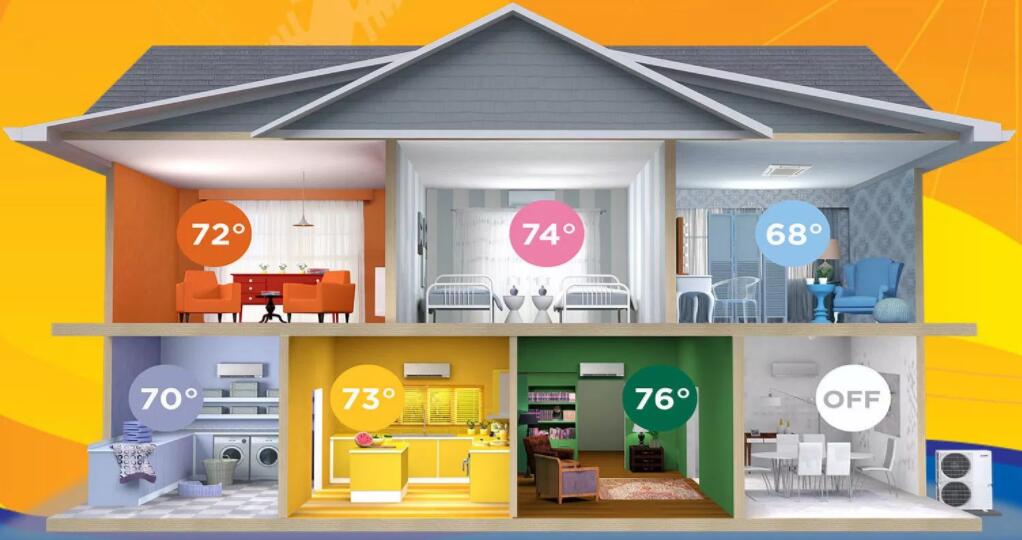
A zoning system divides your home into separate comfort areas, or zones. Each zone is controlled by its own thermostat and uses motorized dampers inside the ductwork to direct airflow where it is needed.
For example, a two-story home may have one zone for the downstairs living areas and another for upstairs bedrooms. Some larger homes have three or more zones, such as:
Common zones in big Florida homes
- Main living area
- Upstairs bedrooms
- Primary suite
- Bonus room or loft
- Sunroom or addition
Instead of cooling the entire home at the same setting, the system sends conditioned air to the zones that need it most. That means less wasted cooling and better control over hot spots.
How Zoning Saves Money
A zoning system saves money in a few practical ways.
1. It reduces unnecessary cooling
If the upstairs is occupied at night, you can cool that zone more aggressively while allowing the downstairs to relax a few degrees. During the day, the opposite can happen. You are no longer paying to keep unused rooms at the same temperature as occupied spaces.
2. It can shorten system runtime
When each zone gets the right amount of cooling, the system does not have to fight to satisfy one thermostat while overconditioning the rest of the home. That can reduce total runtime, which is one of the biggest drivers of energy use in Florida.
3. It improves humidity control
In humid climates like Brevard, Orange, Osceola, Seminole, and Volusia counties, humidity matters as much as temperature. A system that runs more efficiently and cycles more appropriately can help remove moisture better than a setup that is constantly overworking or short cycling. Better humidity control often makes a home feel cooler at a higher thermostat setting, which can save energy.
4. It helps avoid over-sized cooling behavior
Many big homes have systems that were installed to satisfy the most difficult room, not the whole house evenly. Zoning can help distribute comfort more intelligently so you are not forcing the equipment to compensate for design issues with brute force.
When Zoning Makes the Most Sense
Zoning is especially helpful when a home has clear temperature differences that a single thermostat cannot solve. It is a strong option for:
Homes with these features
- Two-story layouts
- Large square footage
- Rooms with large windows or west-facing exposure
- Additions, garages converted to living space, or bonus rooms
- Ductwork serving areas with very different usage patterns
- Bedrooms that need different nighttime temperatures than common areas
In Florida, zoning is often most valuable when one or more areas get intense solar gain. A west-facing great room or upstairs bedroom can feel like a different climate zone by late afternoon.
Important Design Details That Affect Savings
A zoning system only works well when it is designed correctly. Poorly planned zoning can create airflow problems, excess static pressure, noisy ducts, or equipment strain.
A proper installation should account for:
Key HVAC design factors
- Duct size and layout
- Static pressure limits of the air handler
- Number and size of dampers
- Return air strategy for each zone
- Minimum airflow requirements for the equipment
- Thermostat placement away from supply vents and direct sunlight
If the zones are too small or the dampers are not balanced correctly, the system may struggle. That is why zoning should be evaluated as part of the whole HVAC design, not treated as an add-on after the fact.
Signs Your Home Could Benefit from Zoning
You may be a good candidate if you notice any of these issues:
- One floor is always warmer than another
- Bedrooms are too hot at night
- The thermostat is set lower and lower, but some rooms still feel sticky
- Family members disagree on what temperature is comfortable
- Certain rooms are rarely used but still get cooled like the rest of the house
If those problems sound familiar, zoning may help you spend less to stay comfortable.
The Bottom Line
For big homes in Central Florida, a zoning system is one of the smartest ways to cut wasted cooling. It does not reduce comfort; it makes comfort more precise. By conditioning only the parts of the home that need it, zoning can reduce runtime, improve humidity control, and help your HVAC system work more efficiently.
If you are dealing with uneven temperatures or high energy bills, Savage Heating & Air can evaluate whether zoning makes sense for your home and your duct system. Contact our family-owned team at 321-804-4413 for honest guidance and local HVAC expertise.
Comfort starts with a call
Same-day HVAC service across Brevard, Orange, Osceola, Seminole & Volusia.
Call 321-804-4413