Can Lightning Damage Your AC? What Florida Homeowners Need to Know
Can Lightning Damage Your AC? What Florida Homeowners Need to Know
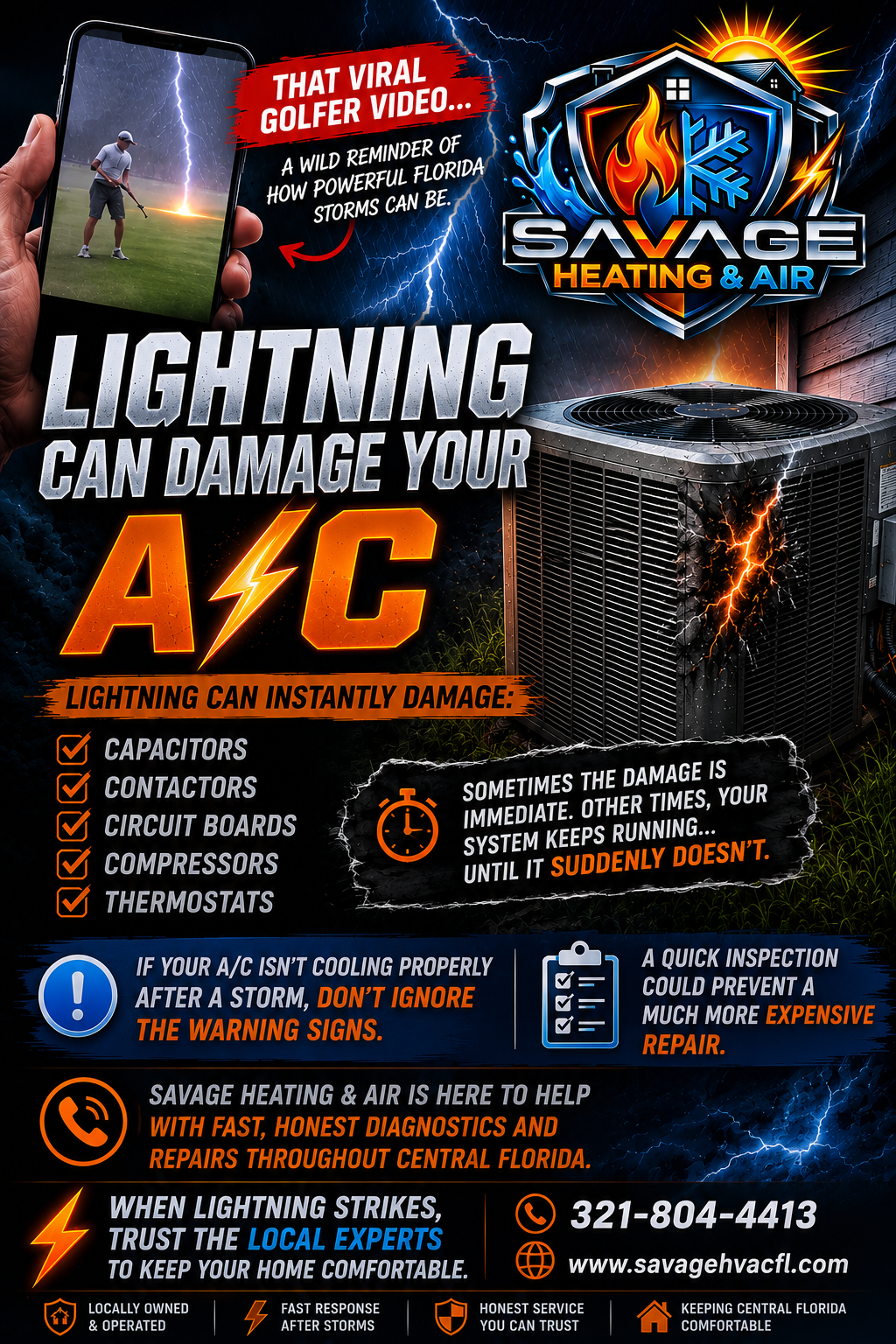
If you've seen the viral video of a golfer being struck by lightning while out on the course, you probably thought, “That's one way to end a round of golf.”
As wild as that video was, it also serves as a pretty incredible reminder of just how powerful Florida thunderstorms can be.
While most people will never experience anything like that themselves, your air conditioner is far more likely to experience the effects of lightning and electrical surges.
And sometimes, the damage isn't obvious right away.
So can lightning actually damage your air conditioner?
Absolutely.
Lightning Doesn't Have to Strike Your AC Directly
One of the biggest misconceptions homeowners have is that lightning has to directly hit their house or outdoor AC unit to cause damage.
It doesn't.
A nearby lightning strike can create an enormous electrical surge that travels through power lines and electrical systems. That surge can make its way into your home and potentially damage sensitive HVAC components.
Depending on the severity of the surge, lightning can potentially affect:
- Capacitors
- Contactors
- Circuit boards
- Compressors
- Fan motors
- Thermostats
- Electrical wiring and controls
Even a nearby strike can create enough electrical energy to damage sensitive components inside modern HVAC equipment.
Why Are Modern Air Conditioners Vulnerable?
Today's HVAC systems are much more technologically advanced than older air conditioners.
Modern systems can contain circuit boards, electronic controls, variable-speed motors, sensors, communicating thermostats, and other sensitive electronics.
These components help your HVAC system operate efficiently and provide better control over your home's comfort.
However, sensitive electronics can also be vulnerable to electrical surges.
That's why a lightning storm can sometimes create an HVAC problem even when everything appears normal immediately afterward.
What Happens When Lightning Damages an AC?
Lightning-related damage can happen in several different ways.
A strong electrical surge may completely destroy a component instantly.
In other situations, the component may be weakened without immediately failing.
For example, your air conditioner may continue operating after a storm but later develop an electrical or operational problem.
Depending on what was affected, homeowners may experience:
- An air conditioner that won't turn on
- An outdoor unit that won't start
- A system that runs but doesn't cool
- A thermostat that isn't responding
- Breakers that repeatedly trip
- Strange electrical noises
- Unusual burning smells
- An AC system that starts and stops unexpectedly
Not every one of these symptoms means lightning caused the problem.
However, if they appear immediately following a severe storm, it's worth having the system properly inspected.
What HVAC Components Can Lightning Damage?
Several important components can potentially be affected by an electrical surge.
Capacitors
Capacitors help provide the electrical boost needed to start and operate certain motors in your HVAC system.
A damaged capacitor can cause an outdoor unit or motor to struggle to start or fail to operate altogether.
Contactors
The contactor controls the flow of electricity to major components of your outdoor unit.
A significant electrical surge can damage the contactor and prevent your air conditioner from operating properly.
Circuit Boards
Modern HVAC systems rely heavily on electronic control boards.
A surge can potentially damage these boards, which can result in communication, control, or operational problems.
Compressors
The compressor is one of the most important and expensive components in an air conditioning system.
A major electrical event can potentially damage the compressor or its electrical components.
That's one reason it's important to take post-storm HVAC problems seriously.
What Should You Do If Your AC Stops Working After Lightning?
If your air conditioner stops working after a major storm, don't immediately assume that you simply need a new AC system.
The problem could be an individual electrical component that can be diagnosed and repaired.
If you notice unusual electrical behavior, repeatedly tripped breakers, burning smells, or other warning signs, don't continue resetting the system or attempting electrical repairs yourself.
Instead, have a qualified HVAC professional inspect the system.
A technician can evaluate the equipment and determine whether the issue involves:
- Electrical components
- Controls or circuit boards
- The compressor
- The thermostat
- Wiring
- Power supply
- Other HVAC components
A proper diagnosis is the first step toward determining what actually happened.
Can You Protect Your AC From Lightning?
There is no way to completely guarantee that your HVAC system will never experience lightning-related damage.
However, homeowners can take steps to reduce the potential risk associated with electrical surges.
One option is surge protection.
Depending on your home's electrical system and HVAC equipment, a qualified professional may recommend whole-home surge protection, HVAC-specific surge protection, or other protective measures.
Proper grounding and professionally installed electrical and HVAC equipment are also important parts of protecting your home and its systems.
Should You Have Your AC Checked After a Lightning Storm?
If your air conditioner is operating normally after a storm, there isn't necessarily a reason to panic.
However, homeowners should pay attention to changes in system performance.
If your AC begins acting differently after a storm, it's worth having the equipment evaluated.
Especially watch for:
- Reduced cooling
- Strange sounds
- Frequent cycling
- Electrical odors
- Breaker trips
- Thermostat problems
- Unexpected increases in electrical usage
- The outdoor unit failing to start
The sooner a potential problem is identified, the sooner you can determine what needs to be done.
Florida Storms and Your HVAC System
Central Florida homeowners know that thunderstorms can appear quickly, especially during Florida's summer storm season.
Your HVAC system is working hard enough dealing with Florida heat and humidity.
Adding powerful electrical storms to the equation creates another potential challenge for your home's most important comfort system.
That's why understanding what lightning can do to your AC is important.
And while we're all hoping that viral golf video remains a once-in-a-lifetime kind of event, it doesn't hurt to remember the lesson behind it:
Florida lightning is serious business.
The Bottom Line
Lightning doesn't have to hit your air conditioner directly to cause problems.
Electrical surges from nearby lightning strikes can potentially damage sensitive HVAC components, including capacitors, contactors, circuit boards, compressors, and other electrical controls.
If your AC starts acting strangely after a storm, don't ignore it.
A professional HVAC inspection can help determine whether your system has suffered electrical damage and whether the problem can be repaired.
At Savage Heating & Air, we believe homeowners deserve honest answers, straightforward diagnostics, and useful information about the systems that keep their homes comfortable.
We're locally owned and proudly serving Central Florida homeowners with HVAC repairs, maintenance, installations, and comfort solutions.
When Florida storms roll through, we're here when you need us.
Need Your AC Checked After a Storm?
If your air conditioner isn't operating normally after lightning or a major storm, Savage Heating & Air can help diagnose the problem.
We'll evaluate your system, explain what we find, and provide straightforward recommendations based on the condition of your equipment.
Don't guess. Get the problem properly diagnosed.
Savage Heating & Air
Locally Owned & Operated
Serving Central Florida
Comfort starts with a call
Same-day HVAC service across Brevard, Orange, Osceola, Seminole & Volusia.
Call 321-804-4413